What to Look for When Hiring a Website Designer (and Red Flags to Avoid)
Hiring someone to design your website can be surprisingly difficult.
There are thousands of designers and developers out there, pricing varies wildly, and almost everyone promises a beautiful, strategic website that will help grow your business. If you don’t work in web design yourself, finding someone who actually knows what they’re doing can be challenging.
good website designers should do more than make your website look nice. Your website needs to represent your business well, work properly across devices, ease navigation, support your goals, and ideally remain relevant long after the project is finished.
Whether you're building your first professional website or redesigning one you've outgrown, here are some of the things I recommend looking for before hiring someone:
1. Look for experience that's actually relevant to your project
A designer doesn't necessarily need to have worked with a business exactly like your’s before, but they should have experience that's applicable to what you're trying to build.
That includes experience with the platform you're using or considering.
squarespace, shopify, wix, wordpress, webflow, and other website platforms all work differently. Being a talented designer doesn't automatically mean someone knows how to work effectively within every platform.
This becomes especially important once you move beyond a basic template. Custom layouts, responsive behavior, integrations, ecommerce functionality, css code, SEO settings, and platform limitations can vary significantly.
If you already know which platform you want to use, look for someone with real experience using it. If you don't know which platform is right for you yet, look for someone who understands multiple options and can explain why they recommend one over another.
The platform should fit the business, not the other way around.
2. Look at their actual portfolio, including live websites
A portfolio is one of the best ways to understand what a designer is capable of.
Don't just look at screenshots, though.
When possible, visit some of the live websites they've worked on. Click around. Look at them on your phone. Pay attention to whether the sites are easy to navigate and whether each project feels appropriate for the business it was designed for.
A strong portfolio shouldn't necessarily mean every website looks completely different. Designers naturally have preferences and points of view. But every project also shouldn't look like the exact same template with different colors and photos.
pay attention to the overall quality of the work rather than simply the number of projects in the portfolio. A smaller portfolio of thoughtful, well-executed websites can tell you much more than dozens of mediocre examples.
And if someone claims to have extensive experience but can't show you any real work, ask why.
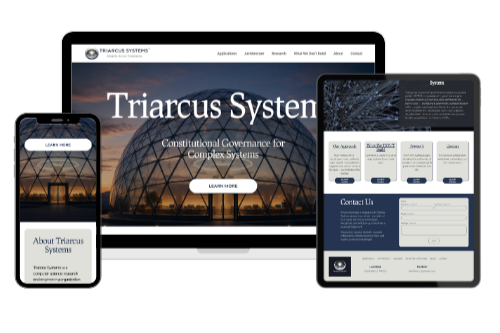
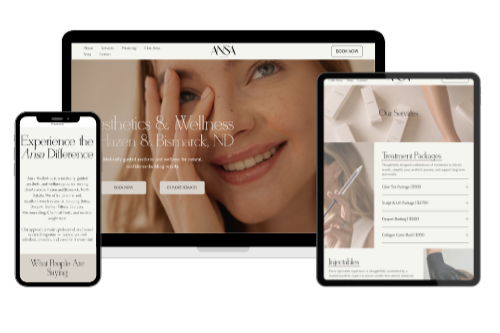
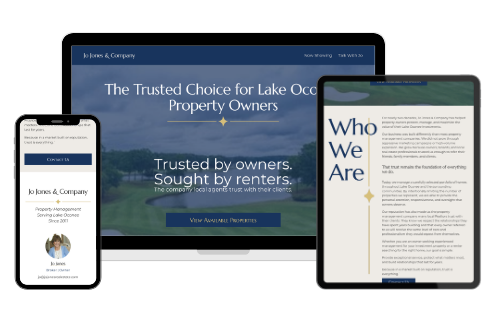
3. Make sure they can customize beyond a template
There is absolutely nothing wrong with starting from a template. Templates can be useful tools and, depending on the project and budget, may be all a business needs.
The problem is when your designer can't go beyond one.
Your website should ultimately fit your brand, content, audience, and goals rather than forcing all of those things into a predetermined layout.
Ask how much customization is included and what happens if the design you want isn't available through the platform's standard settings.
Depending on the platform, a designer may need to use custom CSS, code, custom sections, plugins, apps, or other solutions to achieve a particular result.
You don't necessarily need to understand how any of that works. That's part of what you're hiring them for. You just want to know they aren't limited to changing fonts, colors, and images in an existing template.
4. Pay attention to whether they think about strategy, not just aesthetics
I love a beautiful website.
Obviously.
But a beautiful website that confuses visitors or doesn't generate inquiries isn't doing its job.
Your designer should be thinking about who is coming to your website, what those people need to know, where you want them to go, and what might prevent them from taking the next step.
That can influence everything from your navigation and page structure to where a call-to-action appears.
For a service business, for example, someone may need to understand what you offer, whether it's right for them, why they should trust you, and what working with you looks like before they're ready to inquire.
Good design supports that journey instead of getting in the way of it.
When you're talking to a potential designer, pay attention to the questions they ask. If they're interested in your business, your clients, your goals, and what's currently working or not working, that's usually a good sign.
5. Ask about mobile design
Your website shouldn't just technically "work" on a phone.
It should feel like it was designed for one.
Layouts that look great across a large desktop screen don't always translate well to a narrow mobile screen. Font sizes, spacing, image crops, buttons, animations, navigation, and the order of your content may all need to be adjusted.
This is one area where there is a noticeable difference between simply building a website and actually refining one.
Ask whether mobile optimization is included in the project and how your designer approaches it.
6. Your designer should understand the basics of SEO
Your web designer doesn't necessarily need to be a full-service SEO agency, but they should understand how their work affects search visibility.
At minimum, they should be thinking about things like heading structure, page titles, meta descriptions, image optimization, alt text, mobile usability, page speed, URL structure, and basic on-page SEO.
This is especially important during a redesign.
If you already have a website that's ranking in search results, changing URLs or removing pages without a plan can create problems. A designer working on an established website should understand redirects and take existing SEO into consideration before restructuring everything.
SEO shouldn't be something someone remembers five minutes before your website launches.
7. Communication matters more than people realize
You can hire an incredibly talented designer and still have a terrible experience if they don't communicate.
Before signing a contract, pay attention to how they interact with you.
Do they answer your questions clearly? Do they explain things in a way that makes sense? Do they set expectations? Do you know what happens next?
You don't need someone who responds within five minutes at all hours of the day. You do need someone who communicates consistently and doesn't leave you wondering what's happening with your project.
This is also why it's helpful to be clear on your side about what you want.
You don't need to arrive with a perfectly planned website or know all of the technical terminology, but sharing your goals, preferences, inspiration, must-haves, concerns, and expectations gives your designer much more to work with.
A good website project should feel collaborative.
8. Understand their process before you start
You don't need to know every tiny detail of a designer's workflow, but you should have a general idea of what happens after you pay the deposit.
How will they collect your content?
When will you see the design?
How are revisions handled?
Who is responsible for writing copy or sourcing images?
What happens if the timeline changes?
What do they need from you to keep the project moving?
How does the website get launched?
Having an established process doesn't mean everything will always go perfectly. Websites can have unexpected technical issues and projects sometimes change as they develop. But there should be a structure in place for getting from kickoff to launch.
9. Find out what happens after launch
Launching a website isn't necessarily the end of your relationship with it.
Businesses change. Services change. Team members come and go. Software updates. You may want to add landing pages, publish new content, improve SEO, update images, troubleshoot an integration, or simply have someone available when something isn't working.
Ask what happens once the project is complete.
Will you own the website?
Will you receive all of the necessary logins and access?
Can you make updates yourself?
Does the designer provide training?
Are they available for future updates or ongoing maintenance?
You may never need ongoing support, and that's completely fine. But it's much better to know your options before you need help.
10. Don't choose based on price alone
Website pricing is all over the place.
You can find someone willing to build a website for a few hundred dollars and someone else quoting tens of thousands for what, on the surface, may sound like the same thing.
They're usually not the same thing.
Pricing can reflect experience, strategy, customization, project complexity, development, copywriting, SEO, communication, revisions, testing, support, and many other factors.
That doesn't mean the most expensive designer is automatically the best one for you. It also doesn't mean every business needs a massive custom website.
If you're just starting out and need somewhere professional to send people, a simple DIY or template-based website may genuinely make the most sense. Squarespace, Wix, Shopify, and similar platforms have made it possible to build a functional website without hiring a professional at all.
But there usually comes a point where doing everything yourself starts costing you in other ways.
If your business is established, your services are higher-end, or your website plays an important role in generating leads and sales, choosing the cheapest option simply because it's cheaper can become expensive when you have to rebuild the website six months later.
Website designer red flags to watch for
Not every frustrating project is the result of a bad designer. Clients and designers can simply be a poor fit, projects can run into unexpected problems, and sometimes communication breaks down on both sides.
There are still some things to be cautious about.
They can't show you real work.
If someone is selling professional web design but can't provide examples of websites they've actually built, ask questions.
Every website in their portfolio looks almost identical.
There may not be much customization happening behind the scenes.
They don't discuss mobile design.
Mobile shouldn't be an afterthought.
They promise guaranteed Google rankings.
No web designer or SEO professional can guarantee that you'll rank #1 on Google.
They can't explain what is and isn't included.
Scope, revisions, functionality, content responsibilities, pricing, and deliverables should be reasonably clear before work begins.
They require full control of your accounts without explaining why.
A designer may legitimately need administrative access during a project, but you should understand who owns your domain, website, hosting, analytics, and other important accounts.
They won't transfer ownership of your website.
Unless you've knowingly agreed to a specific managed arrangement where ownership works differently, your business shouldn't be held hostage by the person who built its website.
Communication disappears after you've paid.
A slow reply once in a while is human. Consistently disappearing for weeks with no updates is different.
They take payment and never finish the project.
Unfortunately, this happens. A contract, clear payment structure, documented scope, real business presence, and verifiable portfolio can all help reduce the risk.
They agree to absolutely everything.
Sometimes the best thing a designer can tell you is that an idea isn't a good fit, a feature isn't worth the cost, or another solution would work better.
You aren't just paying someone to click the buttons you tell them to click. You're paying for their expertise, too.
The right designer should feel like the right fit
There isn't one website designer who's right for every business.
Someone may be incredibly talented and still not have the right platform experience, design style, availability, process, or approach for your project.
Look at their work. Ask questions. Be clear about what you're trying to accomplish. Make sure you understand what you're paying for and what happens when the project is finished.
And don't be afraid to choose someone based partly on how comfortable you feel communicating with them.
Building or redesigning your website requires a lot of collaboration. You should feel confident that the person you're trusting with it understands what you're trying to build and has the experience to actually bring it to life.
Looking for help with your website?
I help businesses that are ready for a website that better reflects the quality of what they do. Depending on the project, that might mean a full redesign, improving an existing site, adding custom functionality, or helping determine which platform makes the most sense in the first place.
I work across Squarespace, Shopify, Wix, WordPress, and other platforms, with a focus on thoughtful design, usability, mobile experience, and building something that actually works for the business behind it.
If your current website isn't quite keeping up with where your business is headed, I'd love to hear what you're working on.
LEARN MORE
About Morris Made Design
Morris Made Design creates thoughtful, strategic websites for businesses that have outgrown the DIY stage or simply need their online presence to better reflect the quality of their work. Services include custom website design and redesigns, platform customization, SEO foundations, and ongoing website support and maintenance.